
Mental Rehearsal for Triathlon Performance
The Race Begins Long Before the Starting Horn
One of the most interesting things I have learned after years of coaching triathletes is that the race does not begin on race morning. It begins weeks earlier, often in quiet moments when the athlete is simply thinking about the race ahead.
I have watched athletes arrive at the start line completely prepared physically, yet mentally scattered. I have also watched athletes show up with less than perfect fitness but with such clarity and confidence that they execute a race beautifully.
The difference is often mental rehearsal.
Triathlon is a complex sport. It requires pacing judgment, emotional control, technical awareness, and decision making across three disciplines and two transitions. When the gun goes off, there is very little time to figure things out. The athletes who perform best are usually the ones who have already experienced the race in their mind many times before it happens.
Mental rehearsal is exactly what it sounds like. It is the process of visualizing your race in advance so that your brain learns the rhythm of the event before your body ever arrives at the start line.
What I have noticed over the years is that athletes who practice mental rehearsal race with more calm, more clarity, and far fewer mistakes.

How Does Mental Rehearsal Improve Triathlon Performance?
Mental rehearsal improves triathlon performance by allowing athletes to visualize the race environment, anticipate challenges, and mentally practice decisions before race day. This process strengthens neural pathways associated with skill execution and confidence, which helps athletes stay calm and make better decisions under pressure.
Sports science research has shown that visualization activates many of the same neural circuits as physical training. Studies in endurance sports psychology continue to show that athletes who practice mental rehearsal often experience improved pacing control, reduced anxiety, and greater resilience during difficult moments of competition.
In simple terms, your brain learns the race before your body does.

Why the Brain Needs Repetition Too
Triathlon training traditionally focuses on volume, intensity, and technique. We talk about threshold pace, FTP, aerobic development, and race specific workouts. These are all critical parts of preparation.
But the brain also needs training.
Over the past few years there has been growing recognition in endurance sport that mental preparation plays a major role in performance outcomes. Many professional triathletes now work with sports psychologists and mental performance consultants to improve focus, emotional control, and decision making.
Even age group athletes are beginning to explore these tools.
What mental rehearsal does is create familiarity. When the brain recognizes a situation it feels safer and more confident responding to it.
If you have mentally rehearsed the swim start, the crowded first buoy does not feel overwhelming. If you have visualized climbing the key hill on the bike course, the moment does not feel surprising. If you have already imagined the discomfort of the final kilometers of the run, your brain recognizes the experience and accepts it.
When athletes skip this process, race day can feel chaotic.

The First Place I See Mental Rehearsal Pay Off
One of the clearest examples of mental rehearsal showing its value is in transitions.
Transitions are fascinating in triathlon. They are often where athletes lose time not because they lack fitness, but because they lack clarity.
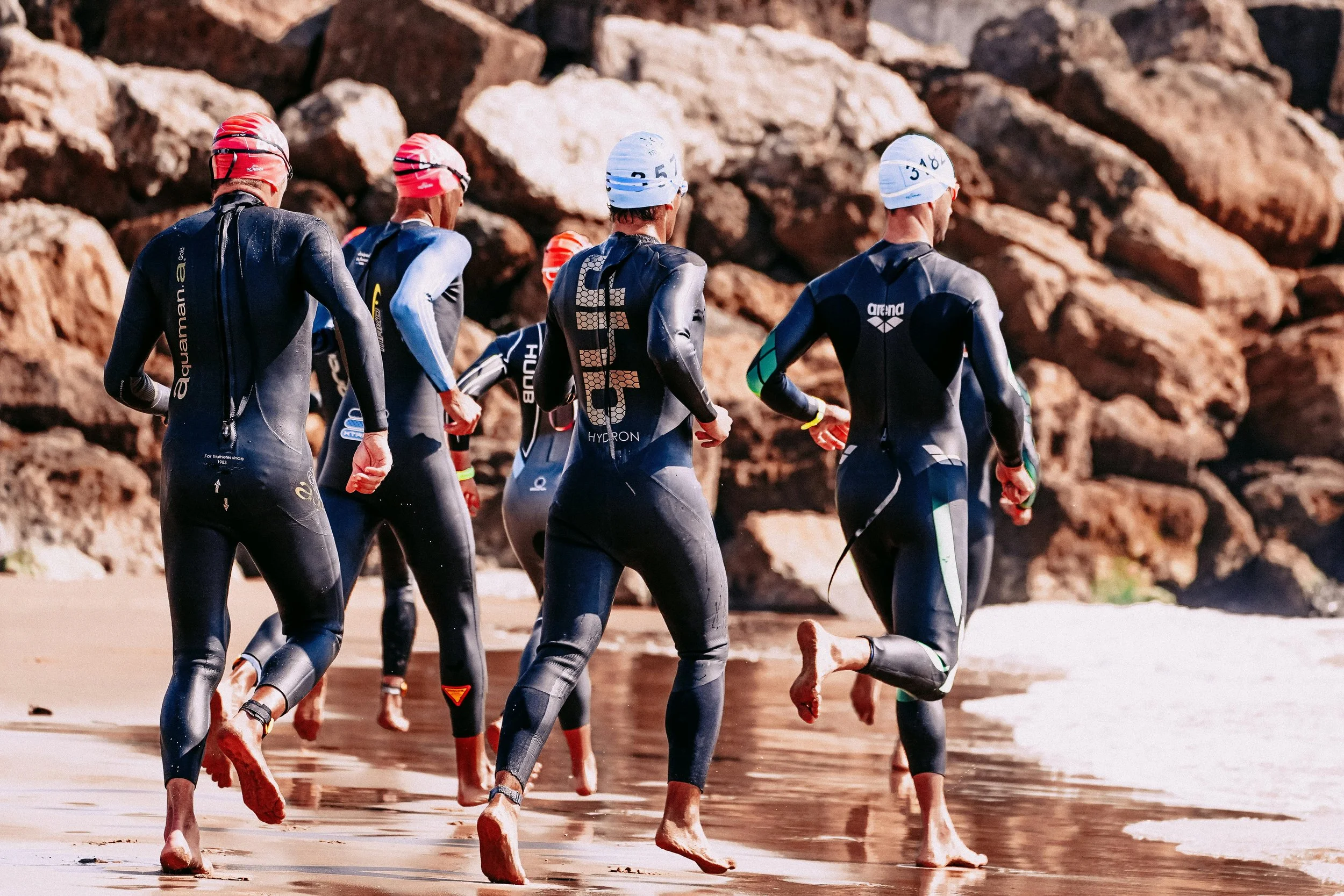
An athlete who has mentally rehearsed transition knows exactly where their bike is racked. They know how they will remove their wetsuit. They know the order in which they will put on their helmet, sunglasses, and shoes.
Nothing is rushed and nothing feels confusing.
I remember working with a young athlete preparing for his first international draft legal race. The environment was intimidating. The swim would be aggressive and the transitions extremely fast.
In the weeks leading into the race we practiced something simple. Every night before bed he mentally walked through the race from start to finish. The swim start, the run into transition, mounting the bike, riding in the pack, entering the second transition, and settling into the run.
When race day came he told me something interesting afterward.
The race felt familiar.
That is the goal of mental rehearsal.
Rehearsing the Hard Moments
Many athletes visualize success. They imagine themselves crossing the finish line or running strongly through the final kilometer.
That is helpful, but it is not enough.
The most valuable mental rehearsal focuses on the difficult moments of racing.
Triathlon inevitably includes moments of discomfort and uncertainty. The swim may feel chaotic. The bike pace may feel harder than expected. The run may present moments where the body wants to slow down.
These are the moments that define performance.
When athletes mentally rehearse difficult scenarios they build emotional resilience. Instead of reacting with panic or frustration, they respond with calm decision making.
Over the years I have encouraged athletes to visualize questions such as:
What will I do if the swim start feels aggressive?
How will I respond if I miss a bike pack in a draft legal race?
What will my internal dialogue sound like when the run begins to hurt?
The answers to these questions become part of the athlete’s race identity.
A New Trend in Endurance Training
Mental rehearsal has become more common across endurance sports in recent years. Many elite athletes now integrate visualization into their weekly training routines.
Technology is even beginning to support this trend. Platforms such as TrainingPeaks and athlete performance apps increasingly include reflection tools where athletes review workouts and mentally process upcoming races.
Research published in sport psychology journals continues to highlight how imagery training improves endurance performance and pacing strategies.
What is encouraging is that this skill does not require special equipment or expensive resources. It simply requires intention.
Five quiet minutes can sometimes provide more mental preparation than another interval session.
How I Encourage Athletes to Practice Mental Rehearsal
When athletes ask me how to begin mental rehearsal, I encourage them to start with a simple routine.
Find a quiet moment during the week before a race. Close your eyes and imagine the race in detail.
Picture the environment. The lake or ocean water. The feel of the wetsuit. The sound of other athletes preparing on the start line.
Then mentally walk through the entire race. The swim strokes. The run into transition. The early kilometers of the bike. The moment you begin the run.
Do not rush the process.
The goal is to experience the race mentally before it happens physically.
Over time athletes become more skilled at this practice. The imagery becomes more vivid. The emotional responses become more controlled.
And the race becomes more predictable.

The Athlete Who Trains the Mind
What I have noticed after years of coaching is that the most successful athletes are curious about their sport. They treat every training session as an opportunity to learn something.
Mental rehearsal fits perfectly into that mindset.
It is a way of studying the race.
It allows athletes to explore decisions, emotions, and pacing before they face those moments in reality. When race day finally arrives, the experience feels like a continuation of preparation rather than a sudden challenge.
Here is the truth about how athletes actually grow.
Fitness builds the engine, but the mind decides how that engine is used.
Triathletes who train both will always have an advantage.

Triathlon is often described as a test of physical endurance, but anyone who has raced long enough understands that it is equally a test of mental clarity.
The athletes who race with calm confidence rarely arrive at that mindset by accident.
They practice it.
Mental rehearsal is one of the simplest and most powerful tools available to endurance athletes. It helps transform race day from something unpredictable into something familiar.
When your brain has already experienced the race, your body simply follows the plan.