The Mental Edge: How Triathletes Can Train Their Mind for Better Performance
Triathlon training usually revolves around three obvious elements: swimming, cycling, and running. Most athletes spend countless hours refining technique, building endurance, and improving fitness in each discipline. But there is another element that quietly influences every race and every training session: the mind.
Mental skills often become the difference between athletes who simply train hard and those who consistently perform at their best. Learning how to manage nerves, stay focused, and respond constructively to adversity is just as important as developing aerobic fitness.
Mental performance is not something reserved only for elite athletes. It is a trainable skill set that every triathlete can develop.

Understanding the Mental Side of Performance
Performance in sport is shaped by four interconnected factors:
Thoughts
Emotions
Physical sensations
Behaviors
These elements constantly influence one another.
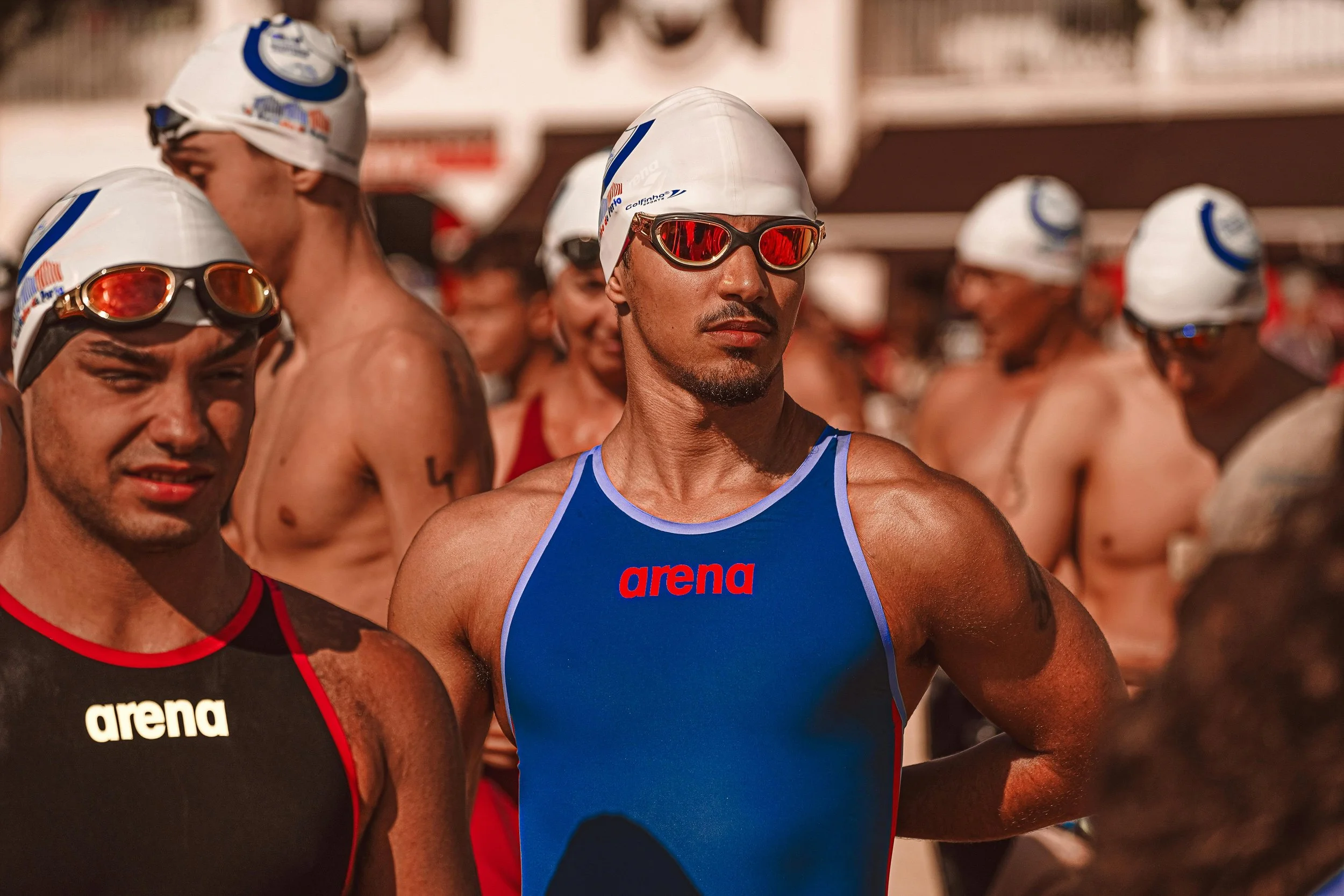
For example, imagine standing on the start line of an open water race. If an athlete starts thinking, “What if I panic?” that thought may trigger anxiety. Anxiety may increase heart rate and muscle tension. That physical tension can then affect breathing and stroke rhythm, which ultimately impacts performance.
The opposite is also true. When athletes learn how to manage their thoughts and emotional state, their body often follows.
This is why mental skills training is so important in endurance sport.
Finding Your Ideal Performance State
Many athletes have experienced what is often called “being in the zone.” Everything feels smooth, decisions happen automatically, and the body responds exactly the way it should.
This is known as the Ideal Performance State.
Every athlete has a slightly different version of this state. Some perform best when calm and relaxed, while others perform best with a higher level of energy and intensity.
Triathlon adds another layer of complexity because the sport includes three distinct disciplines. The mindset needed at the start of the swim may be very different from the mindset needed late in the run when fatigue is high.
One of the most valuable mental skills athletes can develop is awareness of what their ideal state feels like. When athletes recognize that state, they can learn strategies to return to it when nerves, distractions, or fatigue begin to interfere.
Managing Stress During Training and Racing
Triathletes face a wide range of challenges that can disrupt performance.
Some are external factors such as weather, equipment issues, or race delays. Others are internal factors such as poor sleep, fueling mistakes, or self-doubt.
Not all stressors can be controlled. What athletes can control is how they respond to them.
A powerful strategy is simply identifying which factors are within your control. Instead of focusing on the weather or the competition, athletes can redirect attention toward controllable elements like pacing, breathing, fueling, and effort.
This shift in focus often reduces anxiety and helps athletes stay engaged in the race.
Deep Breathing: A Simple but Powerful Tool
One of the most effective ways to manage stress during training or racing is intentional breathing.
When athletes feel nervous or overwhelmed, their breathing often becomes shallow and rapid. This activates the body’s stress response and can increase tension.
Slowing the breath, particularly the exhale, activates the parasympathetic nervous system. This is the part of the nervous system responsible for calming the body.
A simple breathing pattern that works well is:
Inhale for four seconds
Exhale for six seconds
The longer exhale helps lower heart rate, reduce tension, and improve focus.
This technique can be used before a race start, between intervals during training, or anytime an athlete needs to reset mentally.
Like any skill, breathing works best when practiced regularly.
The Power of Self-Talk
Every athlete has an internal dialogue running throughout training and racing. These thoughts can either support performance or undermine it.
There are typically three types of internal voices:
The cheerleader voice provides encouragement and motivation.
The coach voice provides technical instructions and reminders.
The critic voice highlights mistakes or perceived weaknesses.
The critic voice is often the loudest. While it can sometimes point out useful information, it can also spiral into unhelpful negativity.
The key is learning to transform the critic voice into the coach voice.
Instead of thinking:
“I can’t do this.”
Athletes can reframe the thought to:
“I can’t do this yet.”
That small shift keeps the focus on improvement rather than failure.
Over time, learning to guide internal dialogue becomes one of the most powerful tools for maintaining confidence and composure during difficult moments in training and racing.
Building Confidence Through Reflection
Confidence is not built overnight. It develops through consistent recognition of progress.
One of the most effective ways to build confidence is through reflection.
Many athletes benefit from keeping a training journal. This does not need to be complicated. A few short notes after training can be enough.
Athletes might record:
What went well in the session
What needs improvement
What they will focus on next time
Over time, these notes create a record of progress. When athletes review weeks or months of training, they begin to see just how much work they have invested and how much they have improved.
That awareness naturally strengthens confidence.
Focus on the Process, Not the Outcome
One of the most common traps athletes fall into is focusing too heavily on results.
Winning races, hitting specific times, or placing well in a field are all outcomes. While they are motivating goals, they are not always within the athlete’s direct control.
Process goals, on the other hand, focus on execution.
Maintaining strong technique in the swim.
Holding a steady power output on the bike.
Running with good posture late in the race.
When athletes focus on these controllable actions, performance often improves naturally. Process thinking also keeps motivation high even during difficult training periods.
Over the long term, this mindset supports consistent development.
Training the Mind Like Any Other Skill
Just like swimming, cycling, and running, mental performance improves with practice.
Athletes who regularly practice mental skills develop a noticeable advantage over time.
Simple habits can make a big difference:
Practicing breathing exercises during warm-ups
Reflecting briefly after training sessions
Developing helpful self-talk cues
Setting process-based goals
These habits do not require hours of extra training. They simply require consistency.
The Real Difference at Higher Levels
At younger stages of development, natural talent and physical ability can take athletes a long way.
But as athletes progress in the sport, the playing field becomes more even. At higher levels, nearly everyone is physically strong and technically capable.
The athletes who continue improving are often the ones who have developed the mental side of sport as well.
Mental skills do not replace physical training. They amplify it.
When athletes learn to manage their thoughts, regulate their emotions, and maintain focus under pressure, they unlock a new level of performance.
And in a sport as demanding as triathlon, that mental edge can make all the difference.